A Love Letter to the South
The Unfinished South
Listening to ten episodes about Isadore Banks, and trying to understand the distance between a closed file and a family’s questions.
Learning a name
Listening to the first two episodes broke my heart. I had spent time across the Delta, yet I had never heard of Isadore Banks. He was a Black farmer and a veteran who lived in Marion, Arkansas. His body was found on June 8, 1954. The federal case file gives those facts in a few lines. It took much longer for me to understand what those lines left out. [1]
In Unfinished: Deep South, Taylor Hom and Neil Shea follow the story through interviews, local memory, and records. My original responses follow the episodes as the story unfolds. Hearing Dorothy speak made me tear up. She sounded like my granny. Hearing her voice gives that memory a weight that a summary of the case can hardly carry. [2]
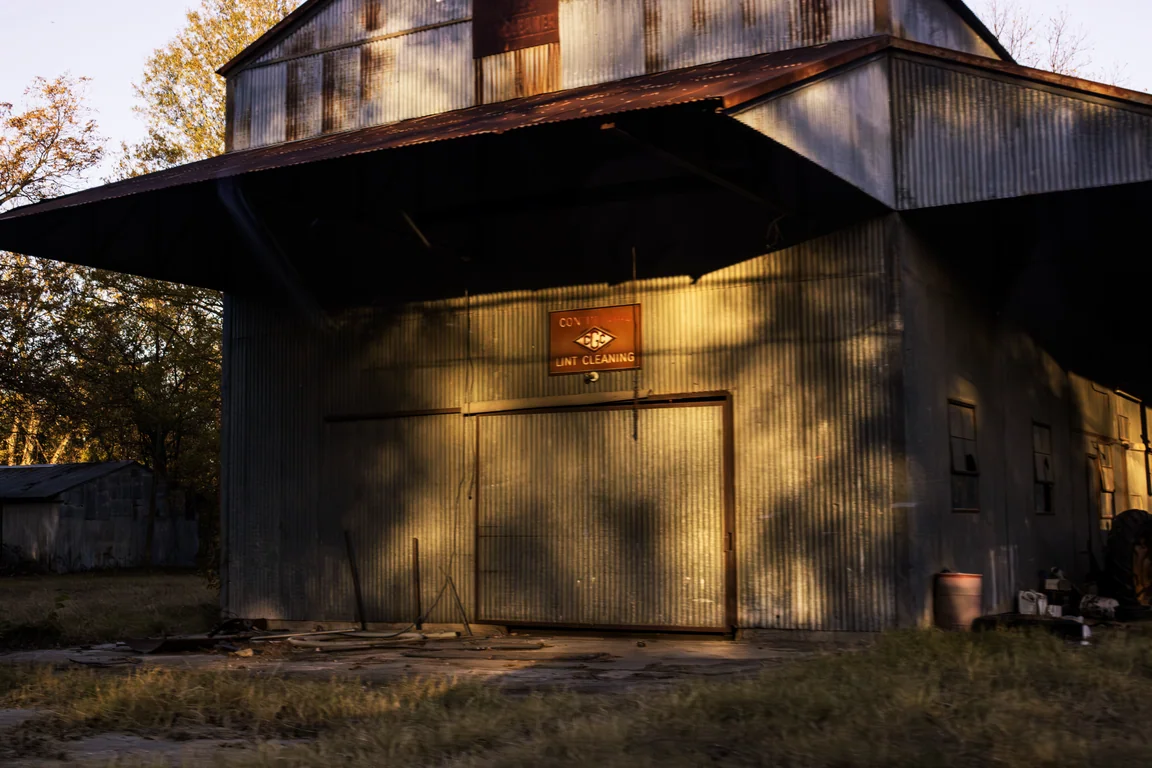
A contemporary photograph of closed barn doors accompanies a piece about listening and access. It has no documented connection to Banks or his property.
Listening without certainty
As the episodes went on, the accounts did not always line up. I wanted the next recording to settle the question raised by the last one. Sometimes it only made the disagreement clearer. A recollection can tell us something important about what people feared, or what a family was told, without establishing who committed a murder. Repeating a name on that basis would turn a question into an accusation.
The Justice Department’s closing notice and the series ask different questions. The notice explains the limits of the evidence available to prosecutors. The family interviews ask what it meant to go on living with a violent death that people in the community would scarcely discuss. A closed file supplies an administrative ending. The people speaking on the recordings still have to live with the questions. [1][2]
The limits of a claim
There is a difference between a question that matters and a claim that can be established. Listening carefully means holding on to that distinction even when a story makes the listener want an answer. Uncertainty should change how I write a sentence: who is speaking, what they know directly, and where the record stops should remain clear.
That care does not require making the account emotionally distant. A voice can carry grief, affection, or fear that belongs in the story even when it cannot resolve the investigation. The challenge is to preserve the human meaning of the testimony without quietly converting that meaning into proof. A responsible retelling can acknowledge both the limits of the record and the weight of what remains unresolved.
Making room to be heard
What I take from the ten episodes is the responsibility that comes with retelling even a little of this history. I can say Isadore Banks’s name. I can distinguish what investigators documented from what someone remembers hearing. And I can leave room for the family to be heard without asking their grief to supply evidence that the investigation never found.
References & publication notes
- U.S. Department of Justice, Isadore Banks: Notice to Close File
- Neil Shea and Taylor Hom, Unfinished: Deep South, podcast
- Original submission
- Unfinished: Deep South · episode responses
- Course
- Arkansas History · fall 2026
- Academic context
- Sarah reports that her professors graded the original coursework and awarded A grades. This expanded publication edition follows that assessment.
- Revision
- Edits the ten episode responses into a continuous listening essay. Uncorroborated allegations about named individuals are omitted. This edition adds section headings and develops the discussion. Earlier public PDFs are preserved separately.