A Love Letter to the South
The Crisis at Central High
The Little Rock Nine had enrolled. A series of decisions turned their walk into school into a national crisis.
Nine students, many decisions
After studying Hoxie, I find it difficult to treat the crisis at Little Rock Central High School as inevitable. Arkansas already had an example of a school board deciding to desegregate and defending that decision under pressure. At Central High in September 1957, adults with the power to carry out a court order made choices that put the burden on nine teenagers. [1]
Melba Pattillo, Ernest Green, Elizabeth Eckford, Minnijean Brown, Terrence Roberts, Gloria Ray, Jefferson Thomas, Thelma Mothershed, and Carlotta Walls were students who wanted to go to school. Daisy Bates and the Arkansas NAACP helped the students and their families prepare. On September 4, the Arkansas National Guard, called out by Governor Orval Faubus, blocked their entry. Eckford’s solitary walk past the crowd became one of the best-known photographs of the crisis. There were nine students, each with a life beyond that morning. [1]
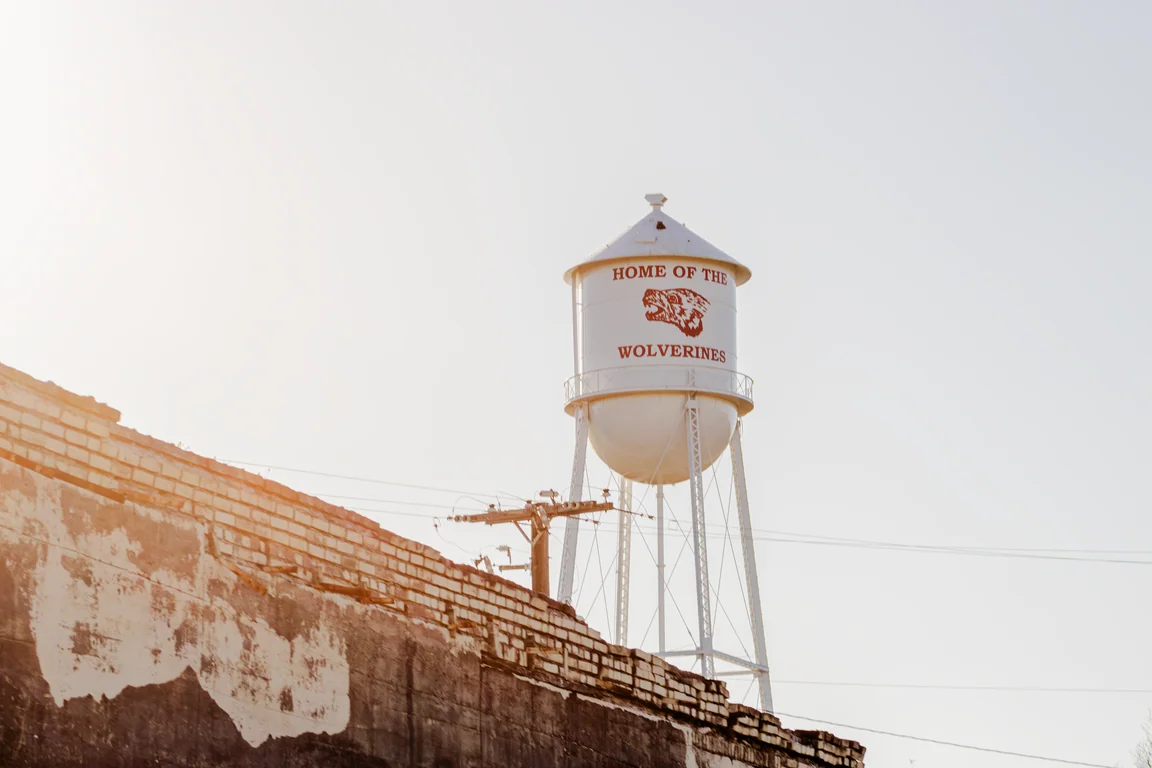
Grady’s water tower carries a school nickname above the rooftops. It belongs to a different town, but it makes visible how publicly a community identifies with its school.
Inside the school
On September 23, the students entered Central High, but a mob outside made it unsafe for them to stay. President Dwight D. Eisenhower issued Executive Order 10730 the following day, placing the Arkansas National Guard under federal authority and authorizing federal military assistance to enforce the court’s orders. On September 25, soldiers of the 101st Airborne Division escorted the Nine into school. In the space of three weeks, uniforms at the school doors had come to mean two very different things. [1][2]
Getting inside hardly settled what happened in the halls. The students faced harassment throughout the year. In May 1958, Ernest Green became Central High’s first Black graduate. That moment belongs in the same account as the Lost Year that followed. Little Rock’s public high schools closed for the 1958–59 school year as resistance continued. [3]
Reading the sequence
The sequence matters because each moment asks a different question about responsibility. Blocking entry, confronting a crowd, protecting an entrance, and sustaining a school year are separate actions. Collapsing them into one dramatic day obscures who held authority at each stage and what that authority was used to do. It also makes the students’ persistence seem like a single act rather than a continuing demand placed on them.
Putting Hoxie and Central High in the same frame is not a way to make their circumstances identical. It is a way to resist the idea that the outcome was already written. Institutions are made of decisions, including decisions to delay or refuse. Keeping the later school closures in the narrative reminds us that a moment of enforcement and a dependable right to an education are different measures of change.
A right beyond the entrance
It is tempting to finish this story with the escort up the steps. The next school year makes that ending impossible. A court could affirm a right and soldiers could protect an entrance. Whether a child could sit in class tomorrow still depended on decisions made in the school, the statehouse, and the community.
References & publication notes
- National Park Service, The 1957 Crisis at Central High
- National Archives, Executive Order 10730
- Little Rock Central High School National Historic Site, Timeline
- Original submission
- Was the Crisis at Central High Inevitable?
- Course
- History of Arkansas · HIST 30083
- Academic context
- Sarah reports that her professors graded the original coursework and awarded A grades. This expanded publication edition follows that assessment.
- Revision
- Corrects Green’s graduation year to 1958 and distinguishes the three September encounters at the school. This edition adds section headings and develops the discussion. Earlier public PDFs are preserved separately.